
 Call Us Now !
Tel : +86 755 27374946
Call Us Now !
Tel : +86 755 27374946
 Order Online Now !
Email : info@bichengpcb.com
Order Online Now !
Email : info@bichengpcb.com
LEO Satellite Boom Sparks High-End "Arms Race" in PCB Supply Chain
LEO Satellite Boom Sparks High-End "Arms Race" in PCB Supply Chain
The market for low Earth orbit (LEO) satellite boards is gaining momentum, with leading PCB manufacturers racing to secure key positions. Recently, multiple companies in the industry chain have successively disclosed their progress, spanning technology reserves, capacity construction, and product supply—all signaling strong confidence in the sector's prospects.
Regarding the current development of PCBs in LEO satellite applications, Zhang Yi, CEO and Chief Analyst at iiMedia Consulting, told Cailianshe reporters that the industry is transitioning from customized development to mass production on assembly lines. Leading companies have also achieved breakthroughs in technical bottlenecks, integrating into core supply chains such as Starlink and China StarNet. PCB industrial clusters for aerospace applications have emerged in the Pearl River Delta and Yangtze River Delta regions, offering robust support in terms of intelligent production lines, batch manufacturing, and delivery lead times.
A senior executive from a listed PCB company told Cailianshe reporters that PCBs for LEO satellites have stringent requirements regarding high frequency and insertion loss. The company produces such products, which are expected to gradually ramp up production this year. To meet these demanding specifications, the supply chain has begun adopting high-performance materials.
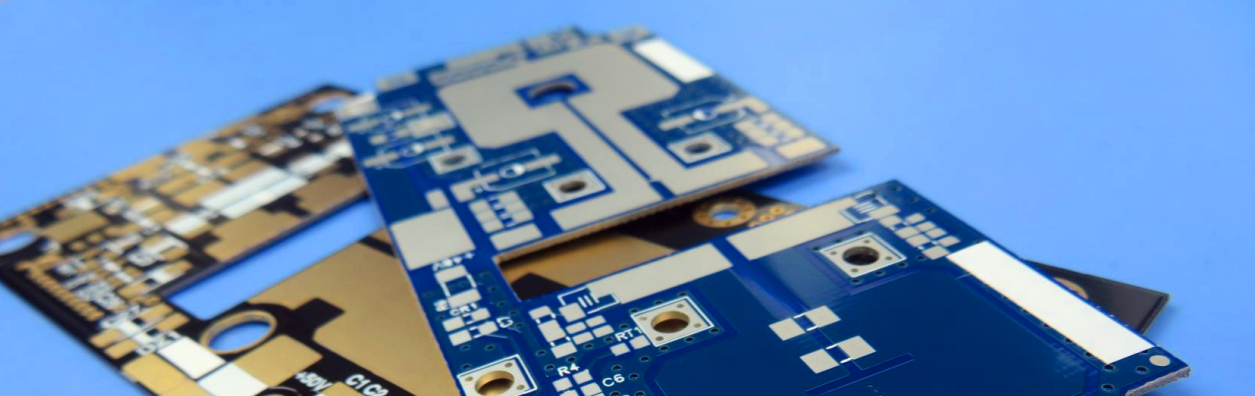
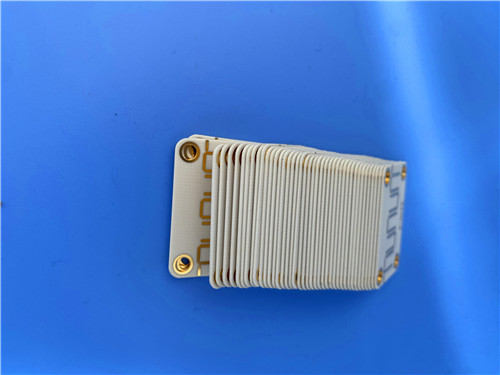
At Bicheng, we address these challenges with advanced material solutions. A typical 2-layer Rogers PCB stackup consists of 35μm copper layers on both sides of an AD300D substrate measuring 1.016 mm (40mil). Rogers AD300D is a ceramic-filled, glass-reinforced PTFE-based laminate engineered for today’s wireless antenna markets. It delivers a controlled dielectric constant (DK 2.94 at 10 GHz/23°C), low loss (dissipation factor 0.0021 at 10 GHz/23°C), and excellent passive intermodulation (PIM) performance as low as -159 dBc. With a CTE as low as 23-24 ppm/°C in the X and Y axes, outstanding dimensional stability, and UL 94 V-0 flammability rating, AD300D ensures reliable, repeatable circuit performance and improved manufacturing yields across applications such as base station antennas, automotive telematics, and commercial satellite radio systems.
Amidst the fervent industry-wide strategic positioning, continuous news emerges from the LEO satellite sector, drawing widespread attention to satellite constellation deployments by various nations. According to the International Telecommunication Union (ITU) website, at the end of 2025, China submitted an application for frequency and orbital resources for an additional 203,000 satellites, covering 14 satellite constellations, including medium and LEO satellites. Meanwhile, SpaceX plans to launch its second-generation Starlink system in 2027.
In Zhang Yi's view, with the accelerated network deployment of LEO constellations, the estimated PCB usage per satellite is around 20-30 boards, presenting a massive market growth opportunity for the industry. Looking at the overall logic of industry strategic positioning, policy support is the primary driver; concurrently, the demand for mass production and high-value drivers is also crucial. During this process, leading companies, leveraging their core technological advantages and certification barriers, are poised to benefit first.
Kinwong Electronic (603228.SH) told Cailianshe reporters that the company holds numerous patents and possesses technological advantages in the LEO satellite and commercial aerospace sectors. Several of its phased array radar boards have already been implemented in end-user products. In 2024, the company onboarded multiple new clients and completed prototype production for over 100 highly complex products, laying a solid foundation to embrace the industry's accelerated growth and the subsequent mass production of related products. The company has identified LEO satellite communication as a key emerging area of focus and will actively position itself to seize market opportunities.
A representative from the Securities Department of Goworld (000823.SZ) told Cailianshe reporters (who called as an investor) that the company's printed circuit board products are used in the LEO satellite sector, with small-batch shipments currently underway. The company is optimistic about the sector's development and has been continuously investing in related technology reserves.
Cailianshe reporters also learned from the Securities Department of Zhongjing Electronics (002579.SZ) that the company has achieved mass supply of its LEO satellite products, though they still account for a relatively small portion of the company's business. A staff member noted, "From a business prospect perspective, we believe this is a promising direction."
Currently, Taiwanese PCB manufacturers such as Compeq and Unimicron have established a presence in the LEO satellite board sector. Additionally, based on a partial compilation by Cailianshe reporters, other listed companies like Faxconn Industrial Internet (601138.SH), Zhen Ding Tech (4927.TW), WUS Printed Circuit (Kunshan) (002463.SZ), and Shennan Circuits (002916.SZ) are also making strategic moves in the LEO satellite PCB field.
Some industry practitioners state candidly that LEO satellite products are generally high-precision, high-end items, such as HDI boards. Volume production depends on specific industry demand and the company's overall development strategy, noting that the LEO satellite market has not yet fully opened up at this stage.
Market analysis suggests that as global LEO satellite constellation construction enters a phase of large-scale networking, the resulting wave of demand for satellite manufacturing, ground equipment, and related sectors is expected to further boost the prosperity of PCBs, a core foundational component of satellite communication systems.
"Compared to traditional application areas, the characteristics and value of LEO satellite PCBs differ significantly," Zhang Yi remarked. LEO satellite PCBs must meet extremely stringent standards, including adaptability to extreme environments, high-frequency high-speed transmission, lightweight design, and ultra-high reliability. Consequently, the certification cycle is longer, and the product value and gross profit margins are significantly higher than those for consumer electronics and automotive PCBs.
"Domestic manufacturers' main advantages lie in production scale, strong cost-control capabilities, and efficient local supply chain coordination. However, current challenges include relatively less accumulated international certification experience; being in the early stages in terms of high-end processes and reliability control; and the need for further improvement in the self-sufficiency of high-end materials, requiring continuous investment and accumulated experience," Zhang analyzed.
 6-11C Shidai Jingyuan, Fuyong, Baoan, Shenzhen, Guangdong, China 518103


For inquiries about our products or pricelist, please leave to us and we will be in touch within 24 hours.
© Copyright: 2026 Shenzhen Bicheng Electronics Technology Co., Ltd.. All Rights Reserved.

IPv6 network supported


