
 Call Us Now !
Tel : +86 755 27374946
Call Us Now !
Tel : +86 755 27374946
 Order Online Now !
Email : info@bichengpcb.com
Order Online Now !
Email : info@bichengpcb.com
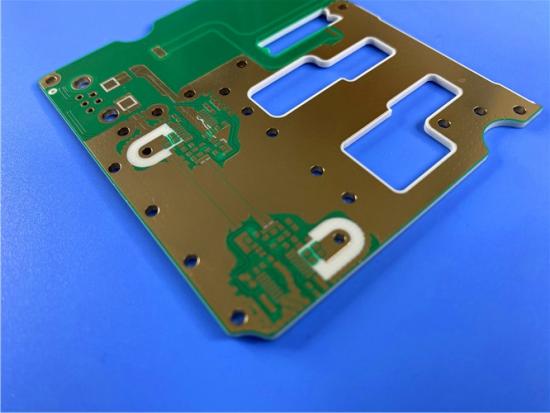
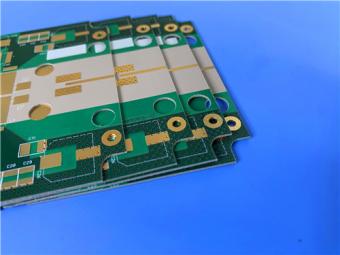
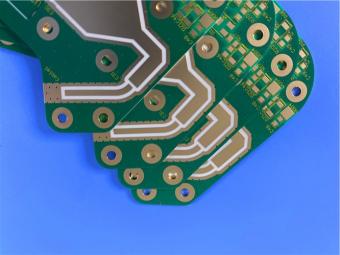
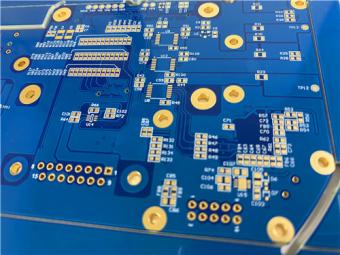
This 4-layer RO4003C ENIG PCB combines the low-loss electrical performance of RO4003C cores with the reliable multilayer bonding capability of RO4450F prepreg in a compact 0.75 mm format.
Item NO.:
BIC-607-v692Order(MOQ):
1-10Payment:
T/TProduct Origin:
ChinaShipping Port:
ShenzhenLead Time:
7-10 days
4-Layer 8mil RO4003C + RO4450F Rogers High Frequency PCB with Immersion Gold 2 u"
1. Product Overview
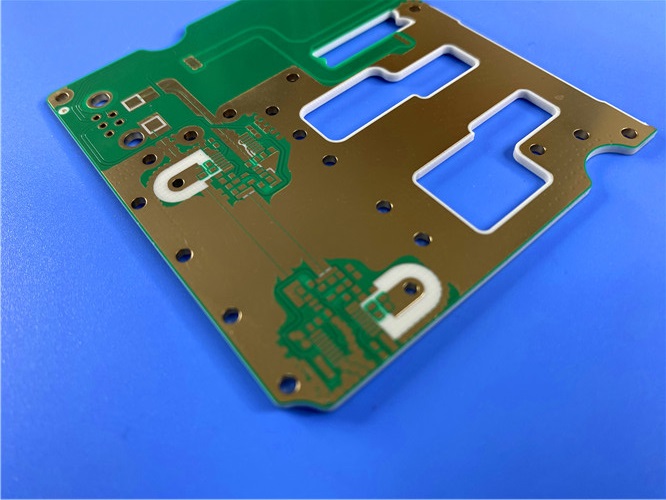
This 4-layer high-frequency board is engineered on a symmetric Rogers material stackup combining two 0.203 mm (8 mil) RO4003C hydrocarbon-ceramic cores with RO4450F bondply as the interlayer dielectric. Built to a finished board thickness of 0.75 mm with 1 oz finished copper on all four layers, the board delivers stable controlled-impedance performance and low insertion loss for RF and microwave circuits. The construction employs full resin-plugged and electroplated-filled vias, 25μm via plating, and immersion gold (2μ") surface finish, all manufactured to IPC-6012 Class 3 standards.
With dimensions of 98 mm×62 mm per piece and 100% electrical testing prior to shipment, this RO4003C multilayer PCB is suited for high-reliability communications, test and measurement, and RF front-end applications where signal integrity and thermal stability are critical.
2. PCB Construction Details
The table below summarizes the complete construction specifications of this 4-layer Rogers PCB, covering material composition, dimensional tolerances, copper weight, surface finish, via processing, and quality certification standards.
|
Parameter |
Specification |
|
Base Material |
RO4003C + RO4450F + RO4003C |
|
Layer Count |
4 layers |
|
Board Dimensions |
98 mm x 62 mm = 1 PCS, ± 0.15 mm |
|
Finished Board Thickness |
0.75 mm |
|
Finished Copper Weight |
1 oz (35 um) on all layers |
|
Via Plating Thickness |
25 um |
|
Surface Finish |
Immersion Gold 2 u" |
|
Top Solder Mask |
Green |
|
Bottom Solder Mask |
Green |
|
Top Silkscreen |
Black |
|
Bottom Silkscreen |
No |
|
Via Process |
All vias with resin plugging and electroplating filling |
|
Manufacturing Standard |
IPC-6012 Class 3 |
|
Electrical Test |
100% tested prior to shipment |
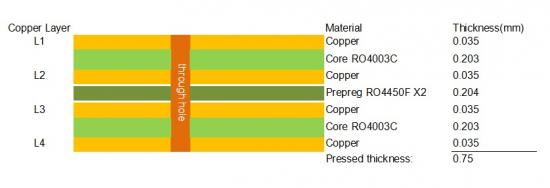
3. PCB Stackup
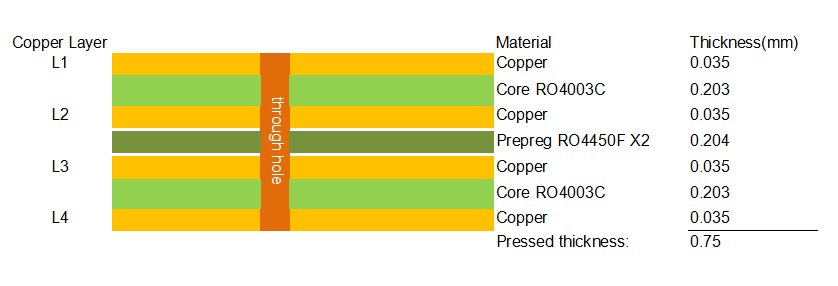
The board adopts a symmetric double-core stackup with two RO4003C dielectric cores separated by a RO4450F bonding prepreg, ensuring balanced thermal expansion, minimal warpage, and consistent impedance control across all signal layers.
4. Key Performance and Differentiators
4.1 Low-Loss Dielectric Performance
The RO4003C core exhibits a dissipation factor of 0.0027 at 10 GHz and a tightly controlled dielectric constant of 3.38±0.05, minimizing signal attenuation in high-frequency transmission lines. The thermal coefficient of Dk is only +40 ppm/°C across−50°C to +150°C, ensuring impedance stability over wide operating temperature ranges. Unlike PTFE-based microwave laminates,RogersRO4003Cprocesses through standard FR-4 fabrication lines, reducing manufacturing cost and lead time without sacrificing RF performance.
4.2 Resin-Plugged and Electroplated Vias
Every via on this board undergoes resin plugging followed by electroplated copper filling. This process eliminates air gaps within via barrels, prevents solder wicking during SMT assembly, improves vertical thermal conduction, and creates a coplanar surface suitable for fine-pitch component mounting—a significant reliability upgrade over conventional tent or capped vias.
4.3 IPC-6012 Class 3 Compliance
Manufactured to the highest rigid PCB performance class, the board meets stringent requirements for via plating thickness (25μm minimum), hole wall quality, dimensional accuracy, and dielectric integrity. Class 3 certification ensures suitability for high-reliability, mission-critical electronic assemblies where failure is not an option.
4.4 Immersion Gold 2μ" Finish
A 2 micro-inch immersion gold finish provides a flat, oxidation-resistant, and highly solderable surface ideal for fine-pitch RF connectors, QFN packages, and wire-bondable pads. The finish maintains consistent contact resistance and supports multiple lead-free reflow cycles without surface degradation.
4.5 Symmetric Stackup for Thermal Stability
With matched RO4003C cores on both outer layers and a low-CTE RO4450F bondply (Z-axis CTE of 50 ppm/°C), the stackup minimizes warpage and plated-through-hole fatigue under thermal cycling. The RO4003C core itself has a Z-axis CTE of just 46 ppm/°C, closely matching copper and extending PTH reliability in temperature-stressed environments.
5. Typical Applications
This 4-layer RO4003C + RO4450F PCB is well suited for:
6. Conclusion
In summary, this 4-layer Rogers RO4003C ENIG PCB combines the low-loss electrical performance of RO4003C cores with the reliable multilayer bonding capability of RO4450F prepreg in a compact 0.75 mm format. The IPC-6012 Class 3 manufacturing standard, resin-filled vias, and immersion gold finish collectively ensure high signal integrity, assembly reliability, and long-term thermal stability. For designers seeking a cost-effective, FR-4-processable high-frequency PCB solution without compromising on RF performance or build quality, this construction offers a proven and differentiated option.
CCL Material Knowledge: Rogers RO4003C and RO4450F
7.1 RO4003C High-Frequency Core Laminate
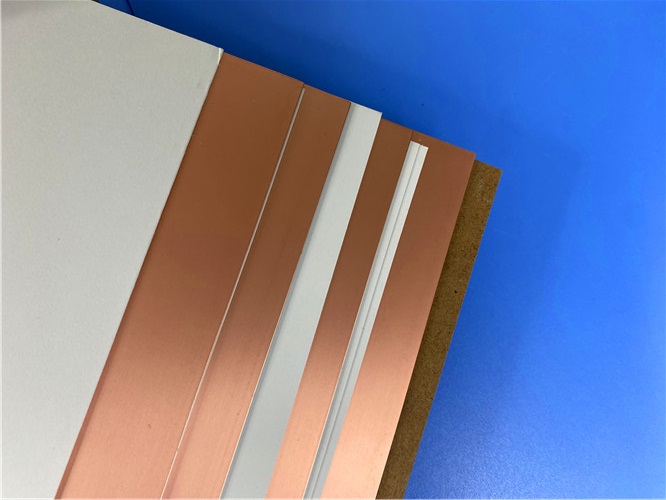
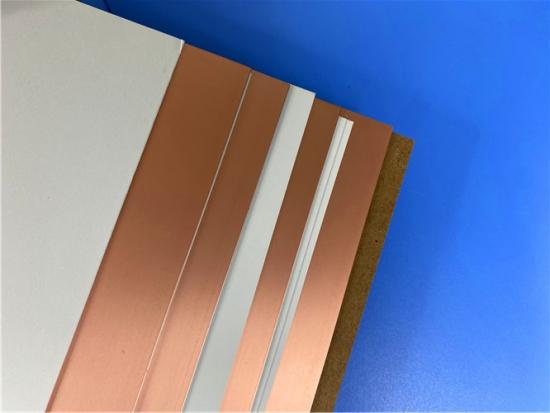
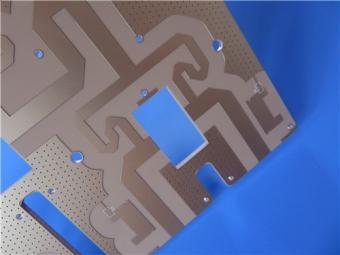
Figure 2: Rogers RO4003C High-Frequency Copper-Clad Laminate (CCL)
RO4003C is a proprietary woven-glass-reinforced hydrocarbon/ceramic laminate that combines the electrical performance of PTFE/woven-glass materials with the manufacturability of standard epoxy/glass (FR-4). It utilizes both 1080 and 1674 glass fabric styles, with all configurations meeting the same electrical performance specification. The material is non-brominated and is not UL 94 V-0 rated; for designs requiring V-0 flame retardancy, Rogers RO4350B or RO4835 are recommended alternatives.
A defining advantage of RO4003C is its low Z-axis coefficient of thermal expansion of 46 ppm/°C, which closely matches copper's CTE and enhances plated-through-hole reliability in multilayer constructions. Its thermal conductivity of 0.71 W/m·K at 50°C provides improved heat dissipation compared to standard FR-4 (typically 0.3 W/m·K), benefiting power amplifier and high-current designs. The glass transition temperature exceeds 280°C, ensuring dimensional stability through multiple lead-free reflow cycles. RO4003C is available in thicknesses ranging from 0.203 mm to 1.524 mm, offering designers flexibility across single-sided and multilayer applications.
The following table presents the complete typical electrical, thermal, and mechanical properties of RO4003C laminate per Rogers Corporation official datasheet.
|
Property |
Typical Value |
Unit |
Test Condition |
Test Standard |
|
Dielectric Constant (Process Dk) |
3.38 ±0.05 |
- |
10GHz, 23°C |
IPC-TM-650 2.5.5.5 |
|
Dielectric Constant (Design Dk) |
3.55 |
- |
8–40GHz |
Differential Phase Length |
|
Dissipation Factor (Df) |
0.0027 |
- |
10GHz, 23°C |
IPC-TM-650 2.5.5.5 |
|
Thermal Coefficient of Dk |
40 |
ppm/°C |
-50°C to 150°C |
IPC-TM-650 2.5.5.5 |
|
Glass Transition Temperature (Tg) |
>280 |
°C |
TMA Method |
IPC-TM-650 2.4.24.3 |
|
Decomposition Temperature (Td) |
425 |
°C |
TGA |
ASTM D3850 |
|
Coefficient of Thermal Expansion (X/Y/Z) |
11 /14 /46 |
ppm/°C |
-55 to 288°C |
IPC-TM-650 2.4.41 |
|
Thermal Conductivity |
0.71 |
W/m·K |
80°C |
ASTM C518 |
|
Volume Resistivity |
1.7×10¹⁰ |
MΩ·cm |
Condition A |
IPC-TM-650 2.5.17.1 |
|
Surface Resistivity |
4.2×10⁹ |
MΩ |
Condition A |
IPC-TM-650 2.5.17.1 |
|
Moisture Absorption |
0.06 |
% |
48h immersion, 50°C |
ASTM D570 |
|
Density |
1.79 |
g/cm³ |
23°C |
ASTM D792 |
|
Copper Peel Strength |
1.05 |
N/mm |
After solder float, 1oz EDC foil |
IPC-TM-650 2.4.8 |
|
Flexural Strength |
276 |
MPa |
Room Temperature |
IPC-TM-650 2.4.4 |
|
Dimensional Stability |
<0.3 |
mm/m |
After etching, 150°C |
IPC-TM-650 2.4.39A |
|
Flammability |
N/A |
- |
- |
UL 94 |
|
Lead-Free Process Compatible |
Yes |
- |
- |
- |
—
7.2 RO4450F High-Frequency Bondply
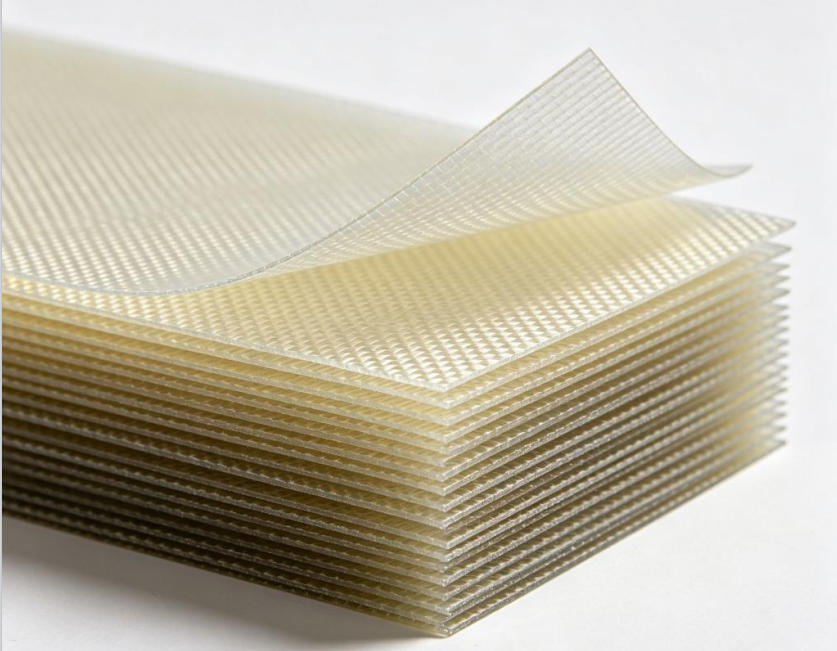
Figure 3: Rogers RO4450F Prepreg / Bondply Material
The following table presents the complete typical properties of RO4450F bondply per Rogers Corporation official datasheet.
|
Property |
Value |
Test Condition / Method |
|
Dielectric Constant (Dk) |
3.52 ± 0.05 |
@10 GHz, 23°C/50%RH / IPC-TM-650 2.5.5.5 |
|
Dissipation Factor (Df) |
0.004 |
@10 GHz, 23°C/50%RH |
|
Electrical Strength |
1000 V/mil |
D-48/50 / IPC-TM-650 2.5.6.2 |
|
Decomposition Temp (Td) |
390°C |
5% weight loss / IPC-TM-650 2.3.40 |
|
Glass Transition Temp (Tg) |
>280°C |
TMA / IPC-TM-650 2.4.24.5 |
|
CTE (X / Y / Z) |
19 / 17 / 50 ppm/°C |
−55°C to 288°C / IPC-TM-650 2.4.41 |
|
Thermal Conductivity |
0.65 W/(m·K) |
@80°C, Z direction / ASTM D5470 |
|
Copper Peel Strength (after thermal stress) |
0.70 N/mm (4.0 lbs/in) |
10s @288°C, 35 μm foil / IPC-TM-650 2.4.8 |
|
Moisture Absorption |
0.04% |
D24/23 / IPC-TM-650 2.6.2.1 |
|
Standard Thickness |
0.0040" (0.102 mm) ±0.0006" |
— |
|
UL Flammability Rating |
UL 94 V-0 |
— |
—
7.3 Processing Considerations
1) Drilling Parameters
RO4003C and RO4450F can be drilled using standard carbide drill bits with typical parameters:
2) Routing Parameters
Routing these materials requires carbide tools with the following conditions:
3) Bonding Considerations
RO4450F bondply provides superior adhesion between RO4003C cores with recommended lamination temperatures of 180-200°C and pressures of 300-400 psi. Vacuum lamination is recommended to minimize void formation.
7.4 Conclusion
The RO4003C and RO4450F material pair represents a well-validated, cost-effective solution for high-frequency multilayer PCB designs. RO4003C delivers tightly controlled Dk (3.38±0.05) and ultra-low loss (0.0027 @10 GHz) with FR-4-compatible processing, while RO4450F provides reliable interlayer bonding with matched electrical properties (Dk 3.52), CAF resistance, and excellent thermal-mechanical stability. Together, they enable designers to achieve microwave-grade performance in a manufacturable, high-yield PCB construction suitable for volume production.
Previous:
4-Layer 20mil Rogers RO3210 ISIG High-Frequency PCB with Controlled Depth MillingNext:
6-Layer Isola Astra MT77 PCB with Blind Via & Resin Plug Immersion Silver FinishIf you have questions or suggestions,please leave us a message,we will reply you as soon as we can!
Categories
New Products
Wangling F4BTMS220 2-Layer DK2.2 PCB 10 mil Core with Immersion Gold
Wangling F4BTME350 10mil DK3.5 High Frequency Substrate PCB 2-Layer Immersion Gold
Wangling F4BTM300 Custom 2-layer PCB 20mil DK3.0 Substrate with Immersion Gold
Rogers 20mil RT/duroid 6202 2-layer ENIG High-Frequency Microwave PCB
Rogers 20mil AD250C PCB Pure Gold High-Frequency Antenna Circuit Board
8-Layer Hybrid RF PCB: RO4350B + TG170 FR-4 + RO4003C with RO4450F Bondply
4-Layer Rogers RO3010 Hybrid PCB Immersion Silver 2.8mm Finished Thickness
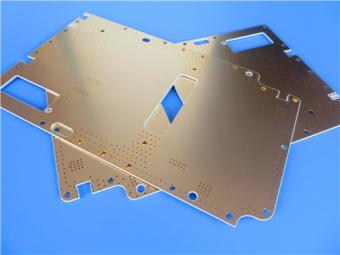
4-Layer 20mil Rogers RO3210 ISIG High-Frequency PCB with Controlled Depth Milling
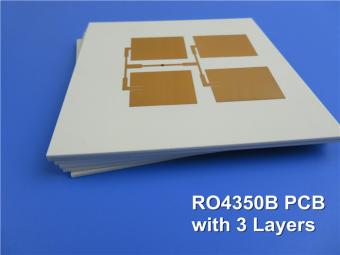
Multilayer high frequency PCBs are made from all high frequency material inclusive of prepreg adhesive.
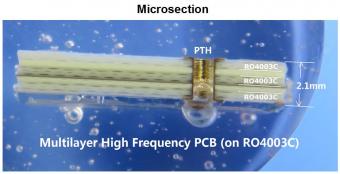
5 layer PCB is fabricated on 3 cores of RO4003C and etched 1 layer copper off to achieve 5 layers.
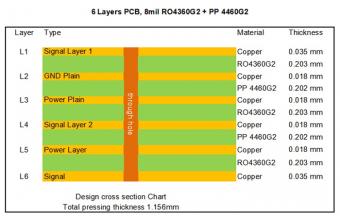
RO4360G2 laminates extend Rogers' portfolio of high performance materials by providing customers with a product that is lead-free process capable and offers better rigidity for improved processability in multi-layer board constructions, while reducing material and fabrication costs.
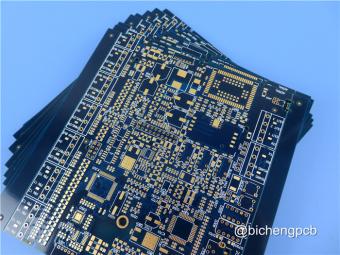
Megtron 6 is an ultra-low loss, highly heat resistant circuit board material designed for mobile, networking, and wireless applications etc.
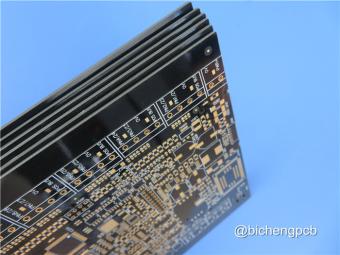
This type of 4-layer circuit board is built on Panasonic Megtron6 (M6) R-5775G high speed low loss material.
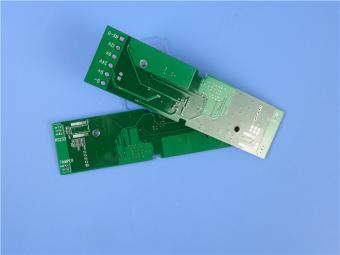
TU-768 / TU-768P laminate / prepreg are made of high quality woven E-glass coated with the epoxy resin system, which provides the laminates with UV-block characteristic, and compatibility with automated optical inspection (AOI) process.
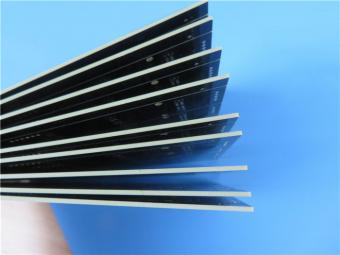
IT-180ATC is an advanced high Tg (175℃ by DSC) multifunctional filled epoxy with high thermal reliability and CAF resistance.
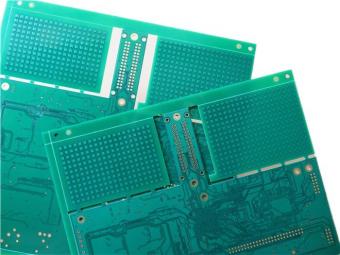
This is a type of 8-layer printed circuit board built on FR-4 Tg175℃ substrate for the application of Satellite Radio.
 6-11C Shidai Jingyuan, Fuyong, Baoan, Shenzhen, Guangdong, China 518103


For inquiries about our products or pricelist, please leave to us and we will be in touch within 24 hours.
© Copyright: 2026 Shenzhen Bicheng Electronics Technology Co., Ltd.. All Rights Reserved.

IPv6 network supported


